
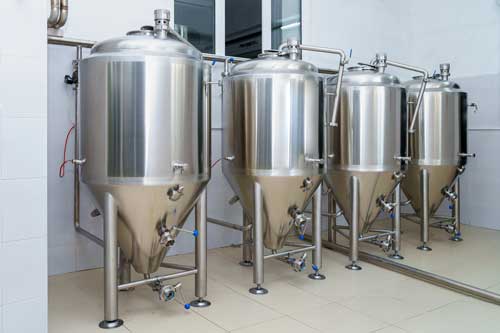
 When it comes to demanding gasket applications, food and beverage processing are among the most demanding. It should be no surprise why, as anything we consume must be handled in systems that are both hygienic and safe. Applications range from dairy operations, beverage production, and just about any type of food processing. Regardless of what is being produced, understanding the key requirements for food grade gaskets is crucial to keeping food and beverages safe for consumption. In this post, we’ll take a closer look at these demands, industry regulations, and what the common material options are.
The Intense Demands of Food Grade Gaskets
Gaskets used in food and beverage production face a unique mix of operational challenges. These include:
Frequent Cleaning Cycles – these typically use aggressive chemicals and hot water, requiring gaskets to maintain their sealing integrity under these harsh threats.
Temperature Fluctuations – these are common, with equipment cycling from refrigeration temperatures to very hot processing. The material must be able to stand up to the extremes, regardless of how cold or hot they get.
Food or Beverage Contact – in certain circumstances, the component will make contact with food or beverages directly or indirectly. Therefore, they cannot leach any harmful substances, or change the taste, color, or quality in any way.
Clean-In-Place (CIP) Factors – gaskets used in dairy and other applications will experience repeated thermal stress from CIP washing systems and pasteurization cycles. Gaskets in these lines need to be compatible with carbonation, alcohol and various pH levels.
Regulatory Standards and Compliance
In order to make sure manufacturers are consistent, regulatory standards are in place. IN the United States, food-grade rubber gaskets must comply with FDA 21CFR 177.2600, while plastic ones must comply with 177.1550. These establish a framework to ensure that gaskets are safe for repeated food contact. This means they must be:
- Non-toxic
- Non-absorbent
- Non-allergenic
- Colorless
- Odorless
- Tasteless
- Resistant to food contaminants and cleaners
Besides FDA regulations, food grade gaskets must also comply with NSF/ANSI standards, 3-A Sanitary Standards and USP Class VI.
Application Requirements
In addition to these safety and contamination regulations, there are several performance requirements for food grade gaskets that vary depending on the application. As we mentioned earlier, many applications require that they gaskets withstand CIP sanitation chemicals, as well as extreme pressures and temperatures. Detectability is also required in high-sensitivity environments to avoid contamination. Beyond production factors, food grade gaskets need to be suitable for production, transport and storage.
Common Food-Grade Gasket Materials
Although the list of requirements rules out many materials, there are several that still make the cut. Each has its own set of benefits as follows:
- Silicone – is excellent for wide temperature ranges
- EPDM – has good resistance to steam and hot water. This makes it ideal for food processing.
- PTFE – is non stick and also offers superior chemical resistance
- Nitrile (NBR, Buna-N) – is ideal for products and ingredients that are oily or greasy
- Viton – has high performance resistance to both chemicals and high temperatures
It’s important to note that materials including EPDM, silicone, PTFE, and Nitrile are commonly used for their resistance to bacteria and ability to withstand high-temperatures.
Conclusion
When it comes to food and beverage processing, corners can not be cut. It’s critical that every component that contacts the material being processed meet strict guidelines for purity and safety. As with many conversations about gaskets, it comes down to choosing the right material. In the case of food-grade ones, manufacturers must adhere to regulations, and make sure the material can withstand production processes, and the rest of the product’s lifecycle.