
Gaskets are subject to all types of fluids and conditions. They range from water and steam to more aggressive ones such as fuel and chlorine. To complicate matters, each of these fluids will affect the gasket differently based on its construction material. Therefore, you must select the right material for each specific use. Getting it wrong will lead to premature failure. So it becomes crucial to understand how common gasket materials will behave when they come into contact various fluids.
Problems with Incompatibility
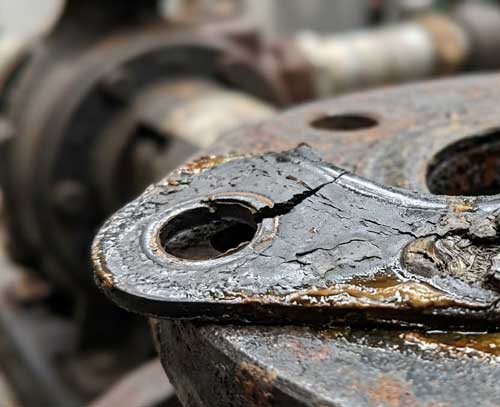
Before we look at each of the gasket materials, let’s look at what happens when the gasket is not compatible with the fluid. Typically, it leads to “silent failure”. This is when the seal appears to be intact. But in reality, it’s failing underneath the surface. It has fundamentally lost its physical integrity due to many reasons which include:
Swelling – as you can imagine, this happens when a gasket absorbs fluid like a sponge. It quickly swells. Curiously, a small amount of swell, around 10% or less, can be your friend, as it can tighten the seal. However, under excessive swelling, the material softens. Its tensile strength diminishes, making it prone to blowing out under the intense pressure.
Shrinking – conversely, some fluids will cause the material to shrink. In this case, the “squish factor” erodes as the gasket gets physically smaller. Similar to how a grape turns into a raisin. As the gasket gets smaller and thinner, it no longer fills the space between the two flanges.
Hardening/Cracking – incompatible chemical exposure can also lead to failure at the molecular level. This begins with cross linking in the polymer chains. As a result, the gasket loses its “memory”, and can no longer spring back and maintain a seal when exposed to temperature changes. Eventually, the gasket becomes frozen in place, waiting for vibration or other movement to crack it.
Gasket Material Compatibility
Other Considerations
Fluid Concentration: Materials compatible with dilute acids (e.g., EPDM with 10% sulfuric acid) may fail catastrophically when exposed to concentrated versions (e.g., 98% sulfuric acid).
Wicking: Standard fiber gaskets can “wick” (absorb) certain fluids through their pores. Applications involving aggressive acids like sulfuric acid often require specialized engineered PTFE like Durian® 9000 to prevent
Industry Standards: Ensure materials meet necessary certifications such as FDA compliance for food and pharmaceutical processes.
Conclusion
As you can see, there are many unwelcome outcomes when selecting the wrong material for the job. In order to get it right, you must find the most compatible gasket material for the fluid it will be subjected to. By understanding how common materials stand up to various challenges, you can find the one that will lead to reliable and predictable performance.