
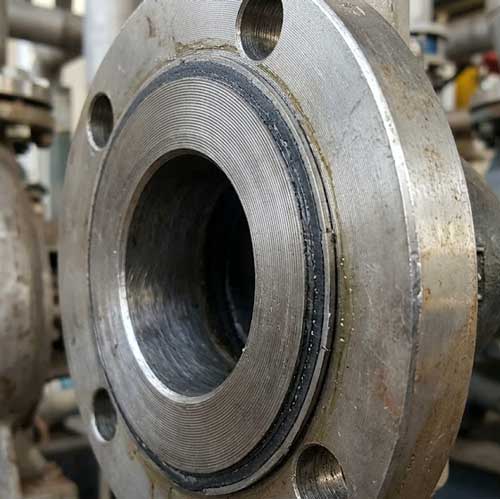
Gaskets provide a critical function for countless uses, yet their overall operating principle is fairly simple. However, when looking closely at the many conditions they are subjected to, the science behind gaskets is more complex. In this guide, we’ll discuss what gaskets are, how they work, the conditions they support, and what it takes to achieve this.
How Does a Gasket Work?
Gaskets create a pressurized, leak-proof barrier between two mating surfaces. They do this by filling imperfections, which prevents gas or fluid leakage. They function by compressing under fastener load to match flange surface roughness, using materials with high elastic recovery to withstand several operating conditions.
What Gaskets Are Designed to Handle?
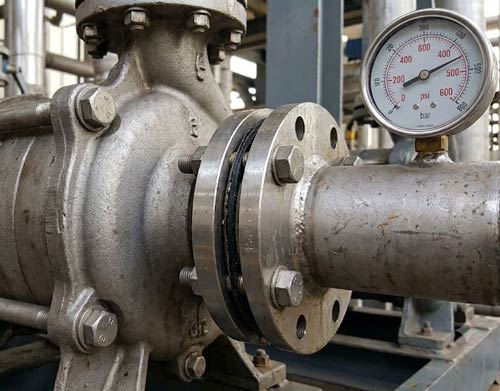 Pressure – inside the system pushes outward against the flange faces, trying to force them apart and open a leak path. A gasket will resist this by staying compressed between the surfaces. Therefore, the squeezing force holding it in place must be greater than the pressure pushing against it. Let’s look at a high-pressure pump housing as an example. If the pressure spikes to exceed what the gasket and bolted joint can resist, the seal fails. This creates openings which allow fluid or gas to quickly escape.
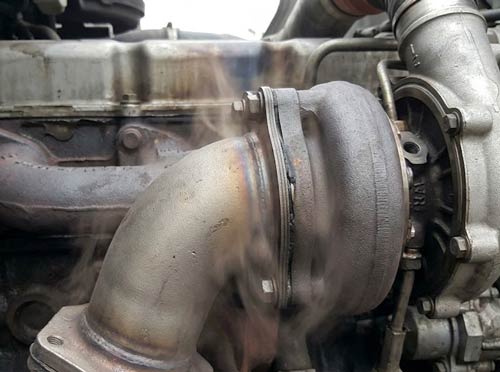
Temperature variations – cause metal flanges and bolts to expand and contract at different rates than the gasket’s material. If the gasket can’t keep up, the joint will loosen or gaps can be created. The proper gasket material must retain sufficient elasticity no matter the temperature it’s subjected to. A good example of this is an engine exhaust manifold. At or prior to start-up, it’s subjected to colder temperatures which quickly ramp up to several hundred degrees. The gasket must expand or contract in response to the fluctuating temperatures. This allows it to continuously conform to the surfaces and maintain a tight seal.
Vibration – causes micro-movements between the flange faces. As a result, bolts loosen and let the gasket lose compression and eventually lose contact over time. To prevent this, gaskets need enough elasticity to “give” with these small shifts and spring back. This allows them to maintain proper contact pressure. The performance is quite different than a rigid seal, which would crack or deform if subjected to these conditions.
Key Gasket Operating Principles
Compression and Sealing – Gaskets require an initial compressive force, also known as a clamp load, to flow into the irregularities of the flange surface. The gasket must be softer than the flange materials to conform to these imperfections.
The “m” Factor (Maintenance Factor) – provides additional clamp force to maintain a seal after internal fluid/gas pressure is applied
Material Elasticity (Recovery) – is the ability of the gasket to bounce back after compression. If a joint vibrates or expands, the gasket must retain enough elasticity to keep filling the gap, preventing seal failure due to stress relaxation.
Internal vs. External Pressure – Gaskets must withstand the operating pressure of the fluid or gas, as well as the mechanical compressive force of the assembly’s bolts.
While the gasket’s overall operating principle isn’t complicated, the topic of material selection for a particular application can be. This is due to the extremely wide range of conditions they can be subjected to. In addition to pressure, temperature/thermal cycling, and vibrations, they must also be able to withstand the chemical properties of the fluid or gas. When you take all of these factors all into account, it allows for countless combinations.
Material Considerations
 Thousands of material types are available to accommodate the wide range of conditions that gaskets must accommodate. They are loosely grouped into three main categories as follows:
Elastomeric/Soft Gaskets (Rubber, PTFE, Cork) – for lower pressure applications, they rely on high elasticity to flow into irregularities.
Metal/Solid Gaskets (Copper, Steel) – for high temperature and pressure applications that require high, uniform torque to maintain the seal. The exhaust system mentioned earlier fits into this category.
Multi-Layer Steel (MLS) Gaskets – use embossed steel layers which act as springs to enable the gasket to hold pressure even if the sealed components shift when cycling. A cylinder head which slightly lifts under load is a great example.
Let’s Not Forget Surface Finish
A discussion about the science of gaskets wouldn’t be complete without talking about surface finish. Here, we are talking about the faces of the components that are sealed. Generally speaking, rougher surfaces require softer gaskets for a better bite. Metal gaskets require smoother finishes to do their job.
Conclusion
While the basic principle behind a gasket might seem simple, the task of successfully sealing a joint requires consideration of many operating factors. Ultimately, success also comes down to finding the right material to maintain a good seal. Ultimately, a simple gasket is a precisely engineered component that performs the demanding job of keeping systems running safe, efficient, and above-all, leak free.